Funded under the National Recovery and Resilience Plan (NRRP), Mission 4 Component 2 Investment 1.3, Theme 10.



News
The Long Timescales of Research
An editorial by OnFoods President Daniele Del Rio on the challenges of building large-scale research, the value of interdisciplinary collaboration, and the long-term impact of public investment in science.
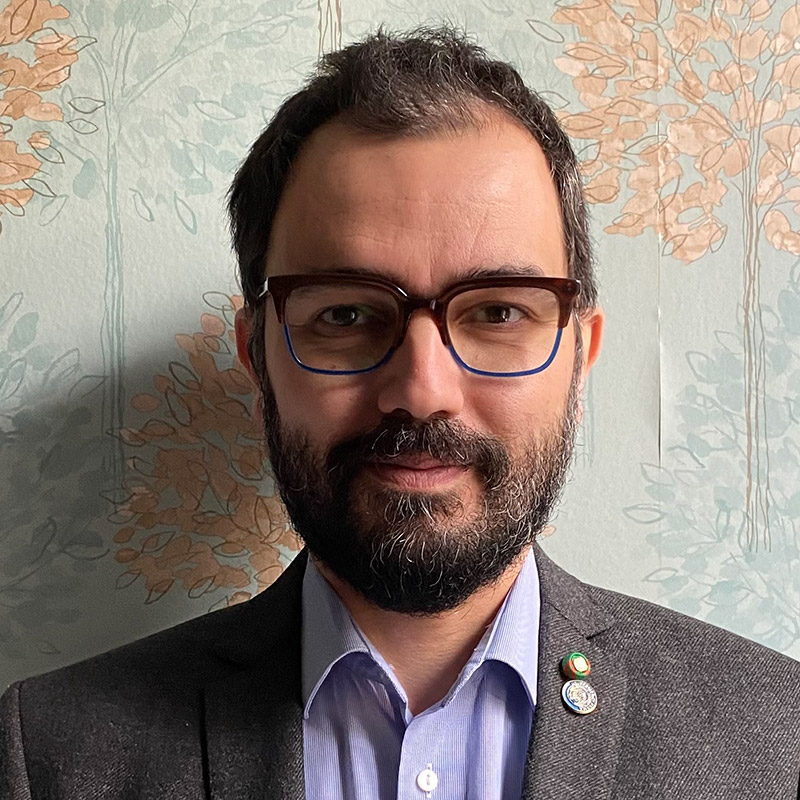
Daniele Del Rio
Full Professor in Human Nutrition
Published: April 14, 2026
Share:
When OnFoods was launched three years ago, it was far from obvious that a project of this scale would be able to come together as a coherent whole.
Bringing together dozens of public and private institutions, hundreds of researchers, distant disciplines, and objectives spanning health, environment, industry and public policy represented, from the outset, a challenge that went well beyond the ordinary management of a large research programme.
The PNRR provided an extraordinary opportunity, but also an equally significant responsibility. It was not only a matter of producing high-quality scientific results, but of experimenting with a different way of doing research: more open, more interdependent, and more aware of its public role. In this sense, OnFoods was first and foremost an exercise in mutual trust among institutions, people and different areas of knowledge.
One of the most relevant lessons from this experience concerns precisely the relationship between different disciplines and organisations. Such relationships are often invoked as a value, but rarely fully practised: genuine interdisciplinarity requires time, method, careful listening, and a willingness to question established languages and reassuring disciplinary boundaries. In OnFoods, this process was neither linear nor without friction, but it generated a shared body of knowledge, built common infrastructures, and opened up new research questions that would hardly have emerged in more traditional contexts.
Another aspect worth emphasising is the profoundly public nature of this project. OnFoods has worked on a vast and fundamental topic—food—which directly affects people’s everyday lives and intersects with crucial issues such as health, inequalities, environmental sustainability and political choices. This has required a constant sense of responsibility on the part of research: producing robust knowledge, but also reflecting on how it can be understood, used and translated into concrete decisions and practices.
Alongside scientific results, which remain fundamental, the project leaves a legacy of effects that are less immediately measurable but equally important: networks of collaboration that continue beyond the formal duration of the funding, young researchers trained in an open and international environment, and infrastructures and data that will remain available to the Italian research system. These are outcomes that often escape formal reporting, yet determine the quality of a public investment in the medium and long term.
The conclusion of OnFoods does not mark an end, but rather a threshold. Many of the questions addressed remain open, and the ongoing transformations in food systems make it clear how necessary it is to continue investing in research, coordination and a shared vision.
If this experience has shown anything, it is that addressing complex problems requires institutions capable of cooperating, scientific communities willing to work together, and public policies that recognise the value of knowledge developed over time.
The President
Daniele Del Rio